


Timing issues and hardware integration 
The Canadian round brought the official schedule to a close. The French drivers came away with wildly different numbers. Pierre Gasly and Isack Hadjar both finished inside the top 10. The Red Bull driver took fifth. Esteban Ocon, though, had a miserable one. Haas’ technical department changed the car’s aero package very late. The engineers fitted the new parts just before qualifying. There was no time to get it working. The stopwatch made the verdict brutal, and Ocon was knocked out in Q1. Haas’ production plan explains why the upgrades went on so late.
Dynamic failures and telemetry analysis
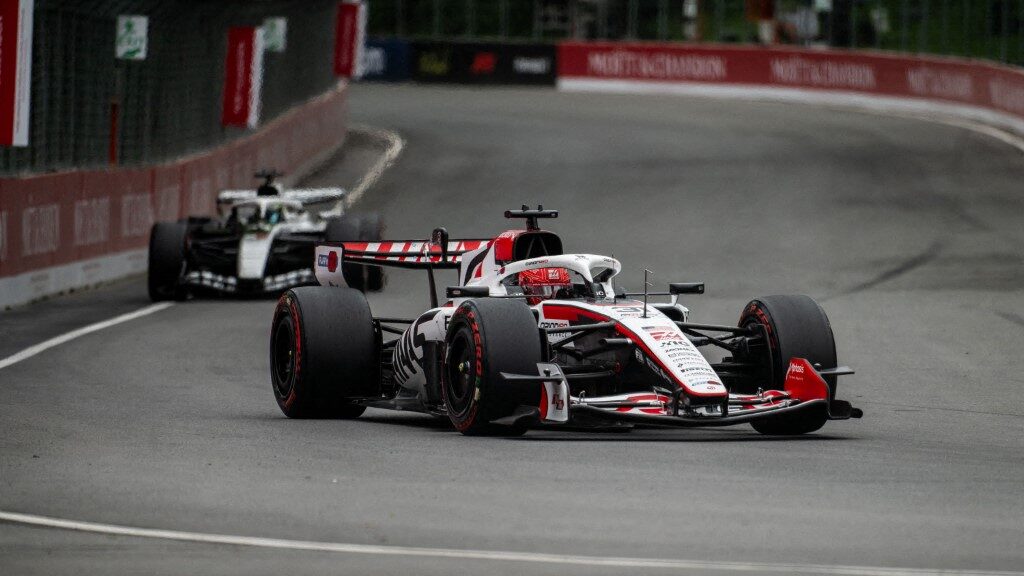
Race day left the car stuck at the back of the field. The driver went head-to-head with Sergio Perez’s Cadillac and Lance Stroll’s Aston Martin. The final result left him 14th. Six cars failed to finish because of mechanical issues. The single-seater suffered serious handling problems. The brakes locked the front wheels over and over again. Ocon says there was a persistent mechanical fault. Turn 10 was where the worst braking issues showed up. Haas’ report also notes two off-track moments at Turn 8. The speed gap was a full second a lap. Haas now has to go back through the whole build process before Monaco.
Try it for $0.99.

Weather call and strategy pay-off
The strategy team backed the right weather call from the grid. The car started 17th. Rivals McLaren and Audi fitted intermediate tyres to their machines. The track still had measurable moisture on it. Haas went with soft slicks. As the asphalt dried, the intermediate runners were badly hit. The double formation lap procedure backed up the maths. The opening lap brought an immediate fight with Fernando Alonso. Once the rain stopped completely after three laps, the tyre choice was proved right. That strategic call was the only real positive Haas could take from the weekend.
Photo by ALBERTO VIMERCATI / DPPI via AFP
Discover the rest of the Formula 1 news on mathodds!

Leave a Reply