


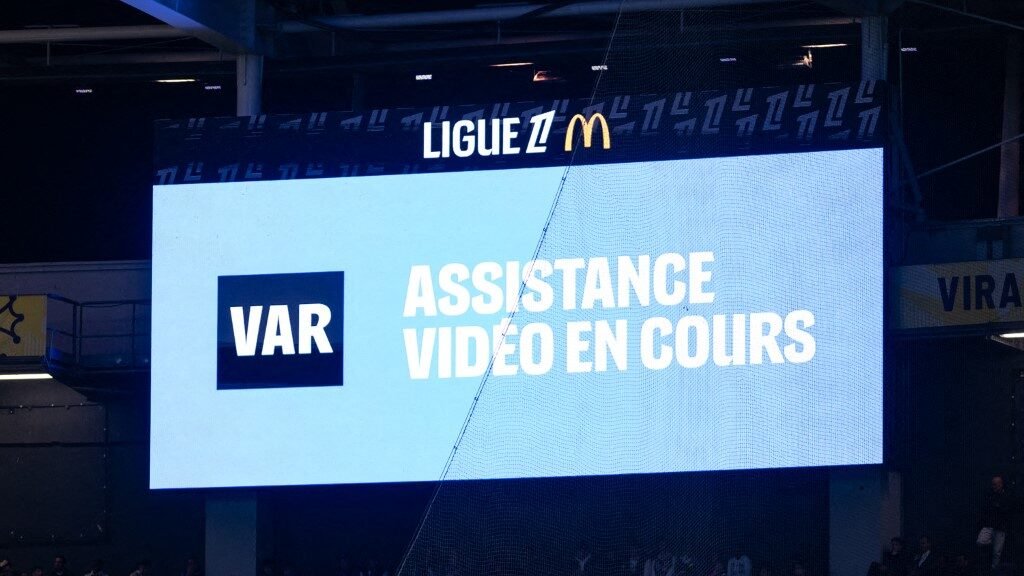
- 1 What can you really say about VAR eight years after it arrived in football?
- 2 Contents
- 3 1. The original promise vs the reality check
- 4 2. What exactly does the IFAB VAR protocol say?
- 5 3. The three big flashpoints that wind fans up
- 6 4. The death of spontaneity: the hit on raw emotion
- 7 5. Open mics, coach challenges: what can be done to save VAR?
- 8 6. FAQ: the video review rules, answered
- 9 Less tech, more common sense
What can you really say about VAR eight years after it arrived in football? 
At the start, the promise sold by the authorities sounded like the answer to every fan’s prayer: wipe out injustice, kill off goals scored by hand or from missed offside calls, bring perfect fairness to every pitch. A few years on from VAR storming into the biggest leagues, the verdict is a good deal messier than that.
Spontaneous celebrations strangled before they can breathe. Decisions that never end. Lines drawn down to the millimetre while baffled supporters stare at a big screen. The video assistant referee was meant to save the game and has instead parked itself at the centre of a permanent row. Vital tool ruined by poor use, or genuine poison to the emotion of football? Worth digging into.
1. The original promise vs the reality check
Think back to the official pitch when VAR was launched. Give the referee a safety net. Stop the glaring howlers, the officiating blunders that have made whole nations weep. Thierry Henry’s handball against Ireland. Frank Lampard’s goal that never counted against Germany in 2010. Plenty more besides. Help the human being without wrecking the rhythm that makes football what it is.
Between the glossy theory and a Saturday night in the real world, a gap opened up. Instead of settling clear-cut disputes in ten seconds, the video era turned matches into courtroom drama. The referee no longer decides on the spot. He waits for confirmation in his earpiece, finger pressed to the headset, while fifty thousand people hold their breath in a strange, heavy silence. The conversation has shifted with it. Some weeks you hear less about players and tactics than about calls made in an anonymous control truck.
2. What exactly does the IFAB VAR protocol say?
To understand where the confusion comes from, start with the rulebook. The Laws of the Game are governed worldwide by the International Football Association Board (IFAB), and the VAR protocol rests on one principle plenty of fans have never heard: minimise interference, maximise benefit.
The only four situations where VAR can step in
A video referee cannot jump in for a routine midfield tackle, a disputed throw-in or a yellow card. The protocol restricts him to four things that can change the course of a match. Goals and the phases that build to them, meaning checks for a foul, offside or handball in the attack. Penalty decisions, meaning whether the foul was inside the box, whether the contact was a dive, whether the incident really merits the maximum punishment. Direct red cards, covering violent conduct and reckless challenges, though never a second yellow. And mistaken identity, where the wrong player has been booked or sent off.
The key idea: clear and obvious error
The rule says VAR should only get involved for a clear and obvious error or a serious incident the officials missed. That is where the wheels come off. What counts as obvious? When a decision needs six camera angles and three minutes of half-speed slow motion, the word has quietly stopped meaning anything at all.
3. The three big flashpoints that wind fans up
VAR sparks so much fury because it has run head-first into the nature of football’s laws, which are stuffed with subjective calls. For all the talk of cutting-edge technology, the system is really one more layer of officials arguing over interpretation.
Offside by a whisker, and the 3D modelling
Offside is factual. You are offside or you are not. Semi-automated technology, with chips in the ball and optical tracking cameras, delivered scientific precision on exactly that question. Whether it made the game better to watch is a different matter. A brilliant goal wiped out because a shoulder, a boot or the shadow of a knee sits a centimetre over the line jars with any sporting logic you care to apply. The law was written to stop strikers camping in front of the keeper, not to punish a body angle no human eye can detect.
The handball rule in the box: a global mess
Probably the worst of it. IFAB has rewritten the handball wording again and again chasing consistency, wheeling in concepts like natural position, enlarged body shape, arm position. The result is total confusion. A handball given on a Tuesday in the Champions League goes unpunished on the Saturday in the league. VAR freezes a single frame of a ball brushing an arm and loses all sense of intention or of how the movement actually happened.
Slow motion warps the reality of contact
Every footballer will tell you the same thing. Show a challenge in slow motion and it always looks worse. A foot that brushes through after winning the ball turns into premeditated assault on replay. Strip out real-time speed and a physical duel loses its context, which is how ordinary contact ends up as an outrageous red card.
Try it for $0.99.

4. The death of spontaneity: the hit on raw emotion
Football is the king of sports for one simple reason. The instant the net ripples, something irrational and collective goes off in the crowd. VAR has its hands around that.
How often now does a striker score a stunner, sprint for the corner flag, then stop dead and glance nervously back at the referee? Supporters in the ground barely dare commit to a celebration. They wait to see whether a white square appears on the big screen. That drain on emotion flattens a match. Chasing a clinical perfection that was never available, technology has been quietly helping itself to the one thing fans came for.
[youtube v=”AM-LVPmSxmU” maxwidth=”560px”]
5. Open mics, coach challenges: what can be done to save VAR?
Arguing for a full return to the past would be naive and, frankly, daft. Scrapping video means accepting fresh howlers that cost clubs and countries qualification. The job is not to bin VAR. It is to change how it gets used.
Explaining decisions live to the crowd, rugby or NFL style
The most obvious step, because confusion breeds anger. Let the referee open his mic in the stadium and explain briefly what he has just seen. “After review, the defender’s arm moves away from the body and changes the ball’s path, penalty.” Education replaces frustration. It will not convert every unhappy supporter, but it puts clarity where there is currently a vacuum.
The coach challenge system
Borrowed from tennis, basketball and American football, this takes routine checks away from the control truck. Each coach gets one or two challenges a match to demand a review of a specific incident. Right, and he keeps it. Wrong, and he has burned it. Benches would think twice, trivial stoppages would disappear, and video would go back to being what it was supposed to be: an emergency tool.
Why make the referee go and look at the screen himself?
Another awkward one. When the three officials in the VAR room are unsure, they send the referee to the monitor to decide for himself, and more often than not he comes back and sticks with his original call. The double check makes sense on paper. In practice these breaks chop the match into pieces. If the mistake is genuinely glaring, let play run while the VAR officials look at it and call him if they need to. Are those three officials somehow less capable than the man in the middle? Nobody has ever explained why they should be.
6. FAQ: the video review rules, answered
In which exact cases can VAR step in?
Four, under the IFAB protocol: goals, penalty incidents, direct red cards, and mistaken identity where the wrong player has been punished.
Why does VAR not intervene on second yellow cards?
IFAB drew the line there to avoid yet more stoppages. Since a second booking means a sending-off, it remains one of the most criticised inconsistencies in the whole system.
Is the referee forced to follow VAR’s view?
No. The referee in chief is still the man in charge out there. The video officials only recommend a review. He is free to ignore them, or to walk to the pitchside monitor for an On-Field Review and make his own call.
Less tech, more common sense
VAR has not wrecked football. Its obsession with absolute perfection is battering the emotion out of it, though, and leaving people inside the game scratching their heads most weekends. Correct only what is clear and obvious. Simplify how the laws are interpreted. Hand the final word back to the officials on the grass. Football is a game of movement and human error, and the attempt to turn it into an exact science was always going to run into that.
Discover the rest of the football news on our site and app mathodds!
Photo credit: Nathan Barange / DPPI via AFP
in your pocket.
Real-time notifications & alerts



Leave a Reply