


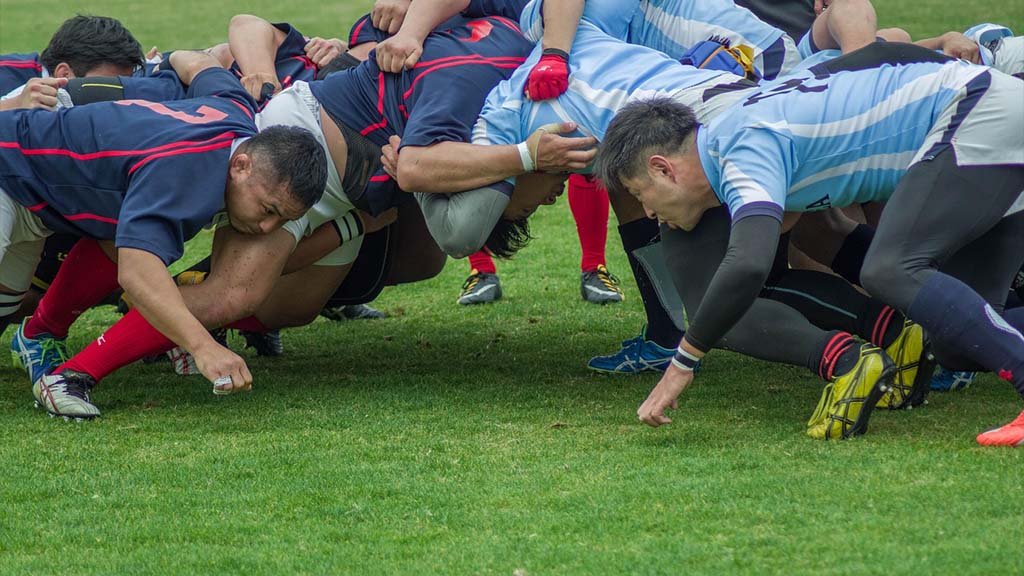
A tighthead finally names the mechanism
Nobody in a coaching shirt has explained it. Three Tests, three referees, a complaint lodged with World Rugby and one expletive from Rassie Erasmus that travelled further than any of the analysis around it. Kyle Sinckler sat down with Dan Biggar this week and did what none of them managed.
“You’re speaking to a tighthead, so I’m always going to be biased,” he said early on. The bias turned out to be the point. Sinckler has scrummaged at Test level since the 2017 Lions tour, and his verdict on the Springboks is that almost everything freeze-framed and arrowed over the past fortnight was legal. The explanation is duller than cheating, which is probably why nobody wanted it.
Try it for $0.99.

Four inches, settled before the ball goes in
The loosehead tucks his right shoulder under his own hooker as he sets. Ox Nche does it. George Bower does it. Sinckler reckons 95 per cent of looseheads everywhere do it, and it traps the opposite tighthead between two heads. Props call it the pincer. The counter is the seam: get your head onto the hooker’s left shoulder, split the join between hooker and loosehead, drive from underneath.
At the FNB Stadium, Wilco Louw found that seam because Bower had set fractionally deeper than his hooker. Siya Kolisi and Pieter-Steph du Toit were already loaded behind him while one of the New Zealand back five was still arriving. Ruben Love was in the bin, South Africa were five metres out, and Nika Amashukeli gave the penalty try. Four inches of head placement decided it, all of it before the ball reached the tunnel.
Biggar’s count across the series puts a number on the gap. Three penalties conceded by New Zealand from 29 scrums on their own ball, against twelve or thirteen penalties and advantages won by South Africa from theirs. Most of that comes down to the speed of the strike, because the side feeding chooses how long the contest lasts. New Zealand go quick channel one and the ball is at the number eight’s feet inside a second. South Africa hold it in the tunnel for twenty or thirty seconds and work.
An escape hatch priced at a free kick
Sinckler counts one genuine case of walking around in the entire series, at Ellis Park on 55 minutes, and Matthew Carley got it right. What irritates him is the loosehead who pulls back an inch and drops, sending a quarter of a tonne through the man who won the collision, who is then penalised for taking the scrum down.
His way out is blunt. Stand up. Refusing to engage costs a free kick under Law 19.12, and since World Rugby removed the scrum option from a free kick in July 2024, South Africa cannot answer it with another scrum. Karl Dickson has the whistle at M&T Bank Stadium on Saturday, with the Springboks 2-1 up and a rebuilt New Zealand front row deciding, in the half-second before contact, whether it fancies the argument at all.
Discover the rest of our rugby news on MathODDS!
in your pocket.
Real-time notifications & alerts



Leave a Reply