


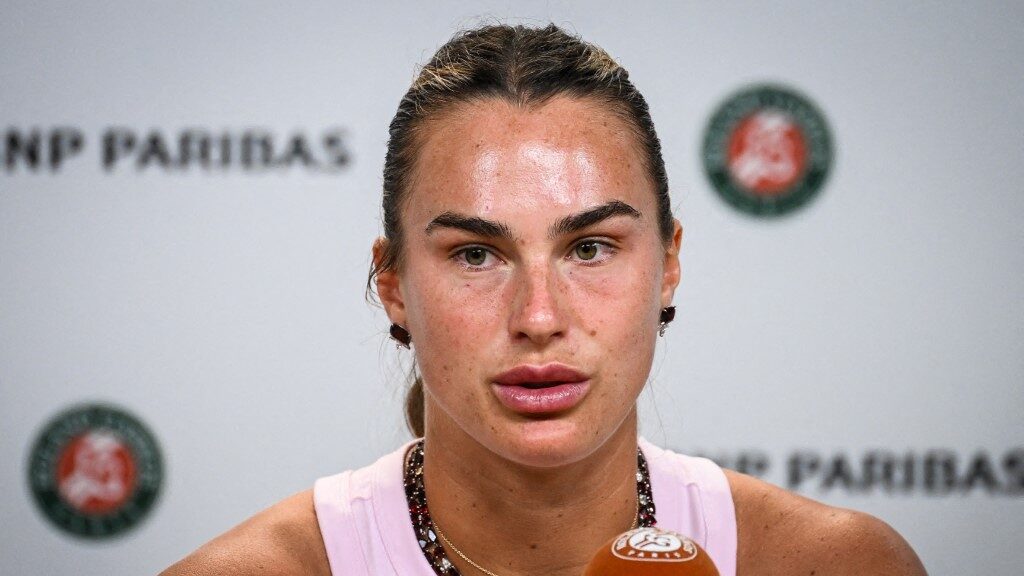
One match, some jewels and a storm
In the middle of a hazy Paris afternoon and on the red clay of Roland Garros, a side story pushed past the baseline. The cameras were not just locked on Aryna Sabalenka’s heavy hitting but on what she was wearing around her neck. Two necklaces, a pair of earrings, garnets, diamonds and a price tag that nudges $100,000. In other words, the world No 1’s opening act already had the whiff of controversy before a ball had even been struck.
Across the net stood Spain’s Jessica Bouzas Maneiro, beaten 6-4, 6-2 but still walking away with a cheque for 87,000 euros, almost the same price as Sabalenka’s jewellery set. That was enough to fire up the debate, and to drag fresh criticism back onto Sabalenka, who has become one of the loudest voices pushing for a fairer split of Grand Slam revenue.
An accusation of hypocrisy that will not go away
So, naturally, the questions came thick and fast in the press room. How do you reconcile a fight for lower-ranked players with jewellery worth more than many players on the secondary tour earn in a full season? Sabalenka did not duck it. She swung back, racket in hand, and made it clear the two issues are not the same thing.
Aryna Sabalenka was asked if she sees how people could think it’s hypocritical that she’s calling for extra prize money while walking on court with very expensive diamonds
“I’ve seen a few people making a comparison between you calling for extra prize money and then wearing the… pic.twitter.com/BtOZAoR13K
— The Tennis Letter (@TheTennisLetter) May 26, 2026
She said her stance on prize money is not about her own bank balance. She earns very well, no one is pretending otherwise. The tour knows it. The public knows it. And she knows it better than anyone. What she keeps hammering home is that the fight is for the players who are scraping by, the ones bouncing between qualifiers, injuries, ITF trips and tight budgets. That is the reality for hundreds of players out of sight of the big courts.
A reluctant spokeswoman
Sabalenka banked $15 million in prize money last season and now owns four major titles. Even so, she says that status should not stop her from speaking up. If anything, she argues, it gives her a bigger platform. Being dominant on court does not mean staying quiet about the cracks in the system. She is happy to own that.
She talks about young players, about those coming back from injury, about those without sponsors. Her point, she says, goes beyond her own life. This is not some self-serving demand, it is a collective argument. Plenty brush that nuance aside too quickly. Sabalenka, though, is not letting it slide.
Try it for $0.99.

The clash with all that obvious luxury
Still, image matters. A player campaigning for a better share of the money while decked out in six-figure jewellery is going to raise eyebrows. The champion knows it, but she is not apologising. Wearing jewellery is part of her routine, part of feeling right on court. She even says that when she feels good in what she is wearing, she plays better. She insists the necklaces barely register on her neck, and she cut the number down before the match anyway. Two instead of three. A small nod to the moment, without giving up the thing that helps her feel confident.
A backdrop that goes beyond Sabalenka
Meanwhile, while she is dealing with the backlash, the tournament rolls on. If :contentReference[oaicite:2]{index=2} lifts the trophy again this year, he will take home 250 000 euros more than last season. Records keep falling, money keeps pouring in at the top end, and the gap to the lower ranks keeps widening.
That is the divide Sabalenka is pointing at. Her jewellery will not change the economics. But her voice might help shift a system that has barely budged for years. And that may be the real battle, far away from the cameras focused on her necklace.
Crédit photo : Matthieu Mirville / DPPI via AFP
in your pocket.
Real-time notifications & alerts



Leave a Reply