
When the Achilles snaps, everything wobbles
In the NBA some injuries aren’t just a freeze-frame. They rewire careers, savage the mind, force you to question the future. An Achilles tear is one of those. Damian Lillard learned it the hard way. For a player built on controlled explosiveness, rhythm and precision, that diagnosis changed everything. Overnight the body stops obeying, certainties crumble, and time becomes an opponent as fearsome as any elite defender.
Learning to slow down when you’ve always been full throttle
What hit Lillard wasn’t just the pain. It was being forced to brake. The man who always charged straight ahead, no detours, had to accept an unfamiliar reality. “It’s one of those injuries where you have to take your time,” he says. The first weeks, then the months, are a string of frustrations. Physical limits imposed. Moves you can’t make. Patience shoved down your throat. For a competitor at that level, it’s almost more a mental test than a physical fight.

Patience as a mental discipline
Damian Lillard doesn’t talk about patience as an abstract virtue. He treats it like a daily drill. Don’t force it. Resist the urge to sprint past the process. Give yourself time, even when the ego screams otherwise. “Giving yourself grace,” he says, as if he’s talking to himself as much as anyone. That calm, deliberate approach cuts against the image of the fiery scorer who closes games with impossible shots.
Seeing the light without skipping steps
There were dark days in that long rehab. Then, slowly, signs started to show. More stable footing. A session better controlled. A feeling coming back. “You start to see the light at the end of the tunnel,” Lillard says. Not a sudden epiphany, but a gradual clarity. Progress you don’t measure in stats but in regained confidence. Every cleared step becomes a small, quiet win.
A return that goes beyond mere basketball
For Portland, Lillard’s return isn’t just about getting back an elite scorer. It’s getting back a voice, a leader, an emotional anchor. Lillard isn’t only the guy who takes the last shot. He’s the one who sets the course, calms things when the game tilts, who imposes a standard. His absence left a hole nobody really filled. His return, even phased, shifts the team’s atmosphere.
A long, methodical process, no shortcuts
Rehab after an Achilles tear is a minefield. Do too much, too fast, and it can all blow up again. Lillard learned that. Surrounded by medical staff and trainers, he follows a rigorous, almost surgical program. Every load is calculated, every comeback measured. Nothing’s left to chance. The aim isn’t just to play again — it’s to play again for good, without looking over your shoulder.
The example of a leader off the court
While away from the floor, Lillard kept influencing. With his words. With his attitude. With the way he publicly owned how hard the process was. By sharing his experience he hands young players a different template. An athlete who doesn’t deny the frustration but channels it. Who accepts vulnerability without ever dropping the standards.
A message for the next generation
Beyond the NBA, Lillard’s path speaks to every athlete. It reminds you some battles aren’t won in a moment but over time. That perseverance isn’t always flashy; it’s often quiet. By telling his story, Lillard sends a blunt message. Even against an injury that has wrecked so many careers, you can come back — if you respect the timeline and never lose your direction.
More than a comeback, a statement
Lillard’s return won’t just be a player reclaiming his spot. It’ll be a man who survived one of the worst tests for a basketball player and came out bigger. For the Trail Blazers, it’s a promise. For the league, a reminder. And for Lillard, a quiet but loud statement. The game took everything from him for a while. He comes back with the same hunger, but a new kind of wisdom. And sometimes that’s even more dangerous.
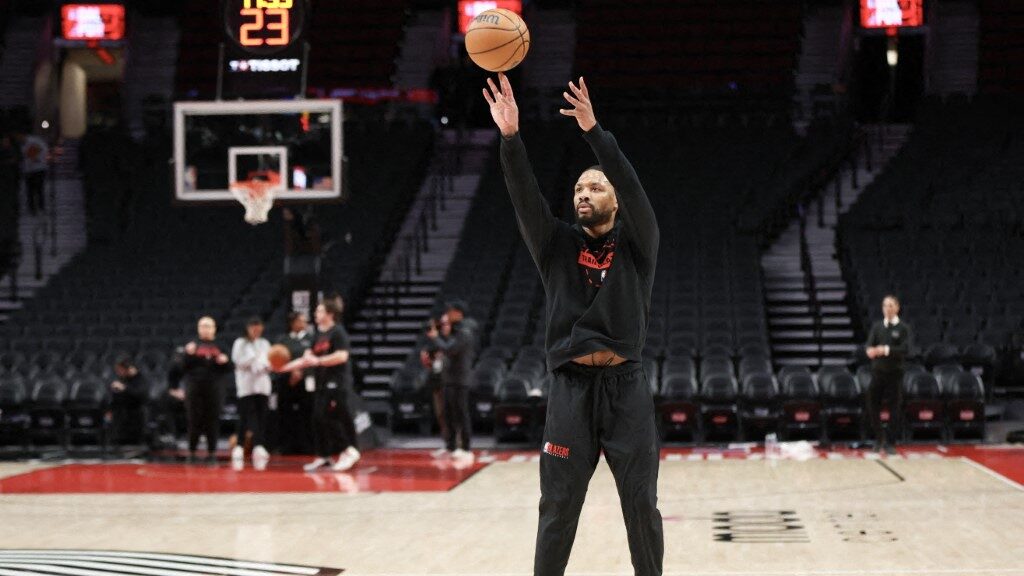
Photo by Amanda Loman / GETTY IMAGES NORTH AMERICA / Getty Images via AFP
Check out the rest of the sports news on Mathodds!

Leave a Reply