


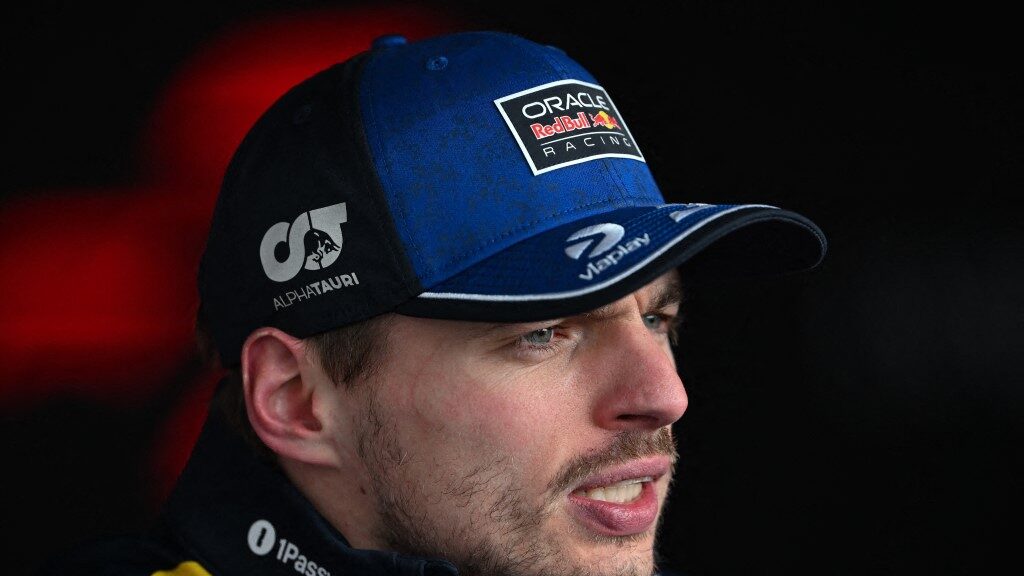
End of an era: 5 reasons why Max Verstappen will never win another F1 world title 
Predicting the fall of an emperor is never easy. Max Verstappen has dominated Formula 1 with a rare kind of ruthlessness. And yet the top tier of motorsport has shown us time and again that no reign lasts forever. Empires usually crack from the inside, caught out by politics, technology or, more simply, fatigue. Here is why the Dutch star’s tally could well stay where it is.
5. Mental wear and the lure of endurance racing 
Verstappen has never hidden his dislike for where F1 is heading. A punishing 24-race calendar, more sprint races that he openly hates, and ever-heavier media duties. Unlike Fernando Alonso, the Dutchman has made it clear he does not plan to hang around forever in the paddock. A simracing obsessive, Verstappen is increasingly eyeing the WEC and the 24 Hours of Le Mans. The urge to crush everyone on Sundays will eventually fade against the pull of fresh challenges away from single-seaters.
4. A fierce rival fightback 
The aerodynamic gulf that once separated Red Bull from the rest of the field has closed up. Milton Keynes is no longer out on its own. McLaren, driven on by Andrea Stella, has shown it can build a car that can battle the RB on every type of circuit. At the same time, the headline pairing of Lewis Hamilton and Charles Leclerc at Ferrari has created maximum-pressure conditions. Verstappen now has to scrap wheel-to-wheel with at least three or four drivers who are capable of taking wins off him straight up.
3. The brain drain at Red Bull 
Formula 1 is, first and foremost, the work of brilliant engineers. Red Bull, though, has taken some seismic hits behind the scenes. Internal power struggles and the departure of major technical figures such as Adrian Newey have broken the momentum in the design office. Historically, when a star designer walks out, a team can coast for a season or two on what it already knows, before development inevitably starts to flatten out.

2. The Red Bull Powertrains – Ford engine puzzle
This is the biggest leap into the unknown. With the new engine regulations, Red Bull can no longer lean on Honda’s rock-solid expertise. By building its own hybrid power unit with Ford, the Austrian outfit is taking the biggest industrial risk in its history. Against long-established engine makers such as Mercedes, Ferrari or Renault, who have lived and breathed this technology for decades, the danger of getting it badly wrong is huge. If the engine lacks reliability or power, Verstappen’s talent won’t be enough to paper over the cracks.
F1 is still a mechanical sport. A driver, no matter how special, lives and dies by the cycle of his team. And history tells us the drop-off is often as sudden as it is brutal.
1. The unforgiving law of domination cycles
Sebastian Vettel thought the titles would keep coming after his four straight crowns at Red Bull. Fernando Alonso looked untouchable after his two titles at Renault. In both cases, the run stopped dead. Formula 1 works in cycles of three to five years. Rivals poach your best engineers, the FIA tweaks the technical rules to knock you off your perch, and motivation eventually swings to the other side of the garage. Verstappen’s cycle has followed the familiar path of the great dynasties. Right now, the stars are simply lining up for the start of a new era, one that does not have Vestappen front and centre.
Photo by Artur Widak / NurPhoto via AFP
So, do you agree with our take or not?

Leave a Reply